
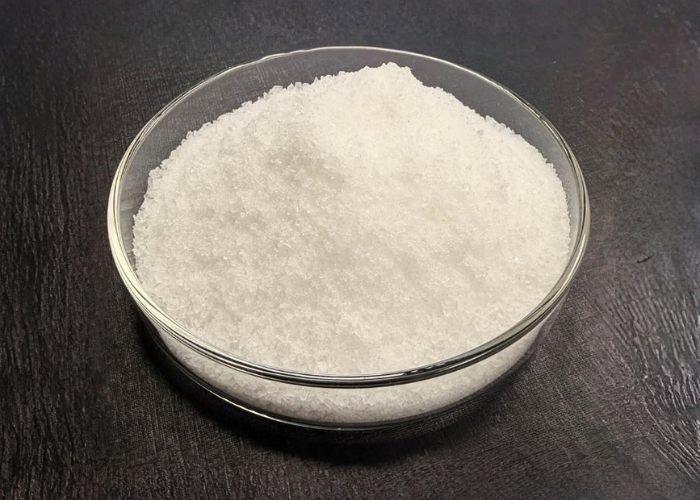
Polyvinyl alcohol (PVA or PVOH) is a water-soluble polymer of great industrial importance, used in the production of adhesives, coatings, films, paper and textile products, construction materials, and various other formulations.
Although dissolving it in water may seem like a simple process, preparing PVA solutions requires attention to several parameters. Degree of hydrolysis, molar mass, concentration, temperature, water quality, addition sequence, mixing efficiency, and processing time directly influence the dissolution rate, viscosity, and final appearance of the solution. Understanding these factors is essential for obtaining homogeneous and reproducible solutions, thereby reducing problems such as clumping, turbidity, undissolved particles, localized increases in viscosity, and gel formation.
Why do some types of PVA dissolve more easily than others?
The behavior of PVA in water is directly related to its molecular structure. The polymer contains a large number of hydroxyl groups (–OH), which are capable of forming hydrogen bonds with both water molecules and other polymer chains. However, the various commercial grades of PVA exhibit different degrees of hydrolysis, a parameter that significantly influences its solubility.
PVA is produced from polyvinyl acetate through a process of hydrolysis or alcoholysis. Depending on the extent of this transformation, some of the acetate groups remain in the polymer’s structure. Thus, commercial products can be classified, in simplified terms, as:
- Partially hydrolyzed PVA, containing residual acetate groups;
- Highly or completely hydrolyzed PVA, containing a much higher proportion of hydroxyl groups.
This structural difference alters the interaction between the polymer chains and water. In partially hydrolyzed PVAs, the residual acetate groups interfere with the organization of the chains and, in general, reduce the intensity of intermolecular interactions between certain regions of the polymer. As a result, water is able to penetrate and hydrate the particles more easily, allowing certain grades to dissolve at relatively lower temperatures. In highly or fully hydrolyzed PVAs, the greater number of hydroxyl groups increases the capacity for hydrogen bonding between the polymer chains themselves. This can result in a more cohesive and organized structure, hindering hydration and dissolution in cold water.
In general, the higher the degree of PVA hydrolysis, the higher the temperature required for its dissolution in water. This occurs because the increased number of hydroxyl groups intensifies the interactions between the polymer chains. Rising temperatures increase molecular mobility and promote competition between polymer–polymer and polymer–water interactions, facilitating hydration and dissolution. Partially hydrolyzed grades, on the other hand, tend to dissolve more easily and can be processed at lower temperatures.
It is important to note, however, that the degree of hydrolysis is not the only determining factor. The molar mass, solution concentration, particle size, and specific characteristics of each commercial grade also influence the time and conditions required for dissolution.
The Importance of Temperature in the Dissolution of PVA
PVA does not dissolve simply through the mechanical mixing of the polymer with water. The process initially involves the hydration of the particles, followed by the penetration of water into the polymer structure and the gradual separation and solvation of the chains. Increasing the temperature enhances the mobility of the molecules and polymer chains, promoting interaction between PVA and water. For this reason, many commercial grades of PVA are prepared using heated water, often in the range of 80 °C to 90 °C, depending on the product specifications.
The temperature, however, must be set according to the specific grade of PVA used. There is no single ideal temperature for all types of PVA. Grades with higher hydrolysis or higher molar mass may require different processing conditions than those used for partially hydrolyzed grades or those with lower molar mass. In addition to temperature, it is necessary to allow sufficient time for the particles to undergo complete hydration.
Why might a PVA solution become cloudy?
Whether a PVA solution appears clear, translucent, or cloudy depends on several factors. Among the main ones are:
- polymer concentration;
- degree of hydrolysis;
- molar mass;
- dissolution temperature;
- processing time;
- agitation efficiency;
- water quality;
- presence of particles or contaminants;
- chemical composition of the formulation.
Incomplete dissolution
One of the most common causes of turbidity is the presence of PVA particles that have not been completely dissolved. When the temperature or processing time is insufficient, partially hydrated particles may remain in the medium. These particles scatter light and give the solution a cloudy or whitish appearance.
Clumping
Rapidly adding PVA to water can cause agglomeration. When a particle’s surface comes into contact with water, initial hydration occurs. If several particles come into contact with water simultaneously and agglomerate, the hydrated outer layer can hinder the penetration of water into the interior of the agglomerate. The result is the formation of the well-known PVA lumps, which can persist for long periods before they completely dissolve. For this reason, the rate and method of polymer addition are important process parameters.
High concentration
An increase in PVA concentration raises the solution’s viscosity and increases the interaction between the polymer chains. At high concentrations, chain movement and mass transfer slow down, increasing the need for efficient mixing and longer processing times. In addition, some concentrated solutions may appear naturally more translucent or opalescent, even after the polymer has completely dissolved.
Degree of hydrolysis
The degree of hydrolysis also directly influences dissolution. In general, partially hydrolyzed PVA tends to dissolve more easily at lower temperatures, while highly or fully hydrolyzed PVA may require higher temperatures and longer processing times.
Water Quality and Chemical Composition
The quality of the water used must also be taken into account. Hardness, dissolved salts, contaminants, and other components present in the medium can alter the interaction between the polymer and the water. Similarly, other ingredients added to the formulation can affect the viscosity, clarity, or stability of the solution. Therefore, industrial applications that require high reproducibility must establish specifications for the water and the raw materials used.
How do you prepare a PVA solution?
The procedure must always comply with the technical specifications for the grade of PVA used. In general, however, certain best practices apply to most processes.
1. Water Preparation
Add the required amount of water to the tank and start agitation. The water must be of a quality suitable for the final application. In more sensitive industrial processes, parameters such as hardness, conductivity, and microbiological quality can be controlled.
2. Warming Up
Heat the water to the temperature range recommended for the specific grade of PVA. For many commercial grades, temperatures between 80 °C and 90 °C are used to promote dissolution. Temperature control should be uniform throughout the tank, avoiding areas that are excessively cold or hot.
3. Gradual addition of PVA
Add the PVA slowly and evenly, while continuing to stir. This step is particularly important to prevent the formation of clumps. Adding the polymer too quickly can create lumps that are difficult to dissolve later and significantly increase processing time.
4. Temperature Control and Agitation
After adding the polymer, keep the system under agitation and at the recommended temperature until the polymer is completely hydrated and dissolved. The time required can range from tens of minutes to a few hours, depending mainly on the concentration, molar mass, degree of hydrolysis, particle size, and efficiency of the mixing system.
5. Evaluation of the Solution
After dissolution, the solution should be tested for the presence of:
- undissolved particles;
- lumps;
- gel-like material;
- excessive turbidity;
- foam;
- variations in viscosity.
When technically necessary, a filtration step may be used to remove residual particles.
How can we obtain more homogeneous and clear solutions?
When the goal is to produce a solution with high uniformity and low turbidity, certain precautions are especially important.
Choosing the Right Grade of PVA
The degree of hydrolysis and the molar mass should be selected based on the application. Partially hydrolyzed grades, for example, may dissolve more easily and may be suitable when the process requires lower temperatures.
Concentration Control
The concentration should be determined based on the desired viscosity and the capacity of the mixing system. High concentrations require greater attention to agitator sizing and processing time.
Temperature Control
The temperature must be high enough to promote the hydration and dissolution of the polymer. However, it is not necessary to bring the solution to a boil. Boiling can cause foaming and make it difficult to control the process.
Controlled addition
The gradual addition of the polymer reduces the likelihood of clumping and improves hydration efficiency.
Appropriate time
The disappearance of lumps does not necessarily mean that the process has reached its ideal state of homogenization. Depending on the PVA grade and the concentration used, it may be necessary to continue stirring the mixture for a certain period of time after the lumps appear to have dissolved.
Important precautions in the industrial process
The quality of the solution does not depend solely on the raw material. Equipment, process conditions, and operating procedures also play a key role.
Cleaning of tanks and lines
The equipment must be thoroughly cleaned before preparing the solution. It is particularly important to avoid residues of materials that are incompatible with PVA. One example is borax, which can interact with the hydroxyl groups of PVA and promote the formation of cross-linked or gelled structures. Contamination by this type of material can cause localized increases in viscosity, gel formation, and, in more severe cases, clogging of lines and valves.
Proper Tank Design
The tank must ensure efficient circulation throughout its entire volume. Areas of low circulation, known as dead spots, can promote polymer buildup and the formation of agglomerates. Deflectors, appropriate tank geometry, agitator position, and discharge system characteristics must be taken into account in the design.
Proper agitation
Higher agitation speed does not necessarily mean better mixing. Small-diameter agitators operating at very high speeds can incorporate large amounts of air and increase foaming without providing adequate circulation throughout the entire volume. For PVA solutions, especially at high concentrations, the agitation system should be designed with the following in mind:
- viscosity;
- concentration;
- tank volume;
- equipment geometry;
- impeller type and diameter;
- flow regime.
Foam Control
Foaming may occur during preparation, especially when the mixing system incorporates too much air. Foam can make it difficult to:
- heat transfer;
- homogenization;
- volume control;
- pumping;
- filtration;
- filling.
When necessary, a defoamer compatible with the formulation may be used. In certain applications, adding the defoamer before introducing the PVA may provide better foam control. However, this must be validated experimentally, as the defoamer may interfere with properties such as transparency, adhesion, film formation, and compatibility with other components.
Preservation and Microbiological Stability
An aqueous PVA solution may be subject to microbiological contamination, especially when stored for extended periods. Therefore, the need to use a biocide or preservative system should be determined based on the actual storage and usage conditions. It is not recommended to establish a universal rule stating that every solution stored for more than 24 hours must contain a biocide. The need for preservation depends on factors such as:
- microbiological quality of the water;
- sanitary conditions of the process;
- storage temperature;
- PVA concentration;
- storage time;
- type of packaging;
- handling conditions;
- final application of the solution.
When the solution is stored for extended periods, it is recommended to evaluate the stability and efficacy of the preservative system. The selected biocide must be compatible with PVA and the other components of the formulation, and must also meet the regulatory requirements applicable to the intended use.
The secret lies in controlling the process
The preparation of a high-quality polyvinyl alcohol solution does not depend on a single factor. Temperature, degree of hydrolysis, molar mass, concentration, addition sequence, mixing efficiency, water quality, and processing time all work together to determine the final behavior of the solution. When these parameters are properly controlled, it is possible to obtain solutions with greater uniformity, more reproducible viscosity, and fewer lumps, undissolved particles, and turbidity. More than simply mixing a polymer with water, the preparation of a PVA solution involves a series of phenomena including hydration, dispersion, dissolution, and homogenization. Therefore, process conditions must be adapted to the specific characteristics of each commercial grade and the desired application.
Polyvinyl Alcohol: A Polymer with Many Possibilities
This versatility of PVA stems from the ability to combine different degrees of hydrolysis, molar masses, and processing conditions to achieve specific properties. This flexibility allows for its use in various industrial sectors, including adhesives, coatings, films, paper, textiles, construction, and various aqueous formulations. Understanding how PVA behaves during its preparation is therefore essential not only to avoid process problems but also to fully exploit the technological potential of this polymer. In the chemical industry, understanding the polymer is the first step toward controlling the process, and controlling the process is the key to achieving quality and reproducibility.