

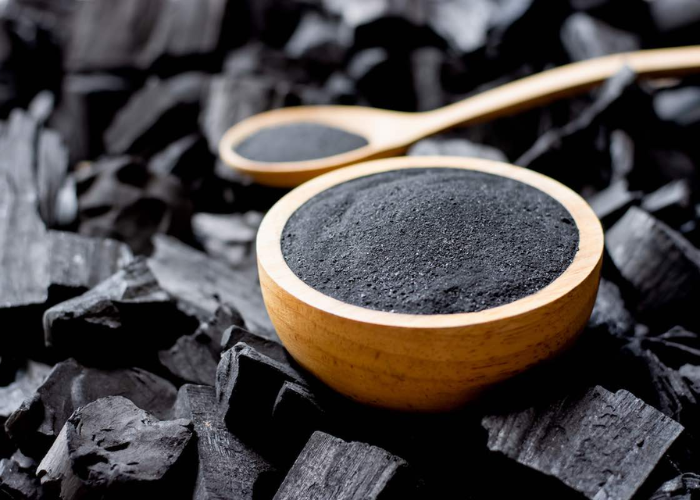
Activated carbon (AC) is one of the most widely used adsorbents in processes for the purification and treatment of water, effluents, gases, solvents, and various industrial streams. Its efficiency is directly related to the combination of its high surface area, porous structure, surface chemistry, and the physical characteristics of the particles.
Although it is often associated simply with the removal of color and odor, activated carbon has a much broader range of applications. Depending on its structural and surface characteristics, it can remove dissolved organic compounds, micropollutants, compounds responsible for taste and odor, certain gases, and other species present in liquid or gaseous streams.
A key point to understand is that there is no single “ideal activated carbon” for all applications. The efficiency of a carbon depends on the relationship between the properties of the adsorbent and the characteristics of the contaminant to be removed.
What is activated carbon?
Activated carbon is a carbonaceous material that has undergone manufacturing processes designed to develop a highly porous internal structure and a surface with high adsorption capacity. Its structure consists of a predominantly carbonaceous matrix, similar to a disordered graphitic structure, containing an extensive network of pores of varying sizes. This structure provides a large internal surface area.
A small volume of activated carbon can have an extremely high specific surface area, often in the range of hundreds to thousands of square meters per gram, depending on the raw material and the activation process. However, a high BET surface area alone does not guarantee greater efficiency for any given contaminant. Pore size distribution and surface chemistry are equally important.
Adsorption: The Fundamental Principle of Activated Carbon
The primary mechanism responsible for the action of activated carbon is adsorption. In adsorption, molecules present in a liquid or gaseous phase are concentrated on the surface of a solid due to interactions between the adsorbent and the adsorbate. It is important to distinguish between:
- Adsorption: occurs predominantly on the surface and on the inner walls of the pores.
- Absorption: occurs when a substance penetrates and distributes itself throughout the volume of another phase.
Activated carbon acts primarily through adsorption, although the broader term “sorption” may be used when the mechanisms of adsorption and absorption cannot be separated.
Adsorção física
Also known as physisorption, it is primarily associated with intermolecular forces, such as van der Waals dispersion forces. It typically involves lower interaction energies and may be reversible, depending on the system.
Adsorção química
Chemisorption involves stronger interactions between the adsorbate and functional groups or active sites on the surface. In this case, chemical interactions may occur that make the process less reversible. In practice, the behavior of many contaminants on activated carbon results from a combination of different mechanisms.
The pore structure: the heart of activated carbon
The effectiveness of activated carbon is directly related to its porous structure. In simple terms, the pores can be classified as follows:
- micropores;
- mesopores;
- macropores.
Micropores are especially important for the adsorption of small molecules, while mesopores and macropores play an important role in the transport and diffusion of molecules into the interior of the adsorbent.
Therefore, it is not correct to simply state that “the more pores, the better.” What matters is the appropriate pore size distribution in relation to the size and characteristics of the molecules to be removed. A large molecular contaminant may have difficulty accessing the smaller micropores, while small molecules can penetrate deeply into the microporous structure.
Raw materials and activation process
Virtually any carbonaceous material with the appropriate composition and structure can, in principle, be used as a raw material for the production of activated carbon. Raw materials used industrially include:
- wood;
- coconut husks;
- coal;
- lignin;
- agricultural waste;
- other carbonaceous materials.
The raw material has a significant influence on the final characteristics of the charcoal. For this reason, two types of charcoal with similar surface area values may perform very differently in a given application.
How is activated carbon produced?
Production can generally be divided into two stages: carbonization and activation.
Carbonization
In carbonization, the raw material is heated under controlled conditions, typically with a limited amount of oxygen. The goal is to remove moisture and volatile components, forming a carbonaceous matrix.
Physical Activation
In physical activation, the carbonized material is subjected to high temperatures, typically between approximately 800 and 1,000 °C, in the presence of controlled oxidizing agents, primarily:
- water vapor;
- carbon dioxide;
- in certain technologies, gases containing oxygen.
The activating agent reacts partially with the carbon, promoting the development and opening of the porous structure. Process control is essential, as excessive activation can lead to a significant loss of yield and undesirable changes in the adsorbent’s structure.
Chemical activation
In chemical activation, the raw material is impregnated with chemical agents before or during heat treatment. Among the agents traditionally used are:
- phosphoric acid;
- alkali hydroxides;
- certain salts or other activating agents, depending on the technology.
After activation, washing steps are required to remove the reagents and residual soluble species. Chemical activation allows for the production of materials with porosity characteristics different from those obtained exclusively through physical activation.
Granular and powdered activated carbon
Activated carbon can be sold in various physical forms.
Pulverized activated carbon (PAC)
It has smaller particles and, consequently, a high specific surface area and rapid contact kinetics. It is widely used when the carbon is dosed directly into the stream or in processes in which it will subsequently be separated by sedimentation or filtration.
Granular activated carbon (GAC)
It consists of larger particles and is particularly suitable for use in fixed beds and adsorption columns. Its mechanical strength is an important parameter, especially when the charcoal must undergo regeneration or backwashing cycles.
Operation of activated carbon columns
Granular activated carbon can be used in various configurations. In the liquid phase, vertical downflow columns are commonly used, although upflow systems are also employed, especially when suspended solids are present or when the process has been designed for this condition. In gas-phase applications, horizontal configurations may be advantageous due to high flow rates and the need to limit pressure drop. Depending on the flow rate and the treatment objective, the columns can operate:
- em série;
- em paralelo;
- com fluxo ascendente;
- com fluxo descendente;
- em leito fixo;
- em configurações de leito móvel ou expandido.
Why use columns in series?
Serial operation helps increase process safety. In a system with multiple columns, the first column receives the highest contaminant load, while the last column acts as a sort of polishing barrier.
A highly efficient operating strategy involves using the freshest activated carbon in the final stage of the process. This way, even when the first column begins to approach saturation, the last column still has high adsorption capacity. This concept is related to the management of the mass transfer zone (MTZ).
Parallel Operation
When the flow rate is high, a single column may become too large for the installation. In this case, the flow can be divided between two or more columns operating in parallel. This configuration allows for:
- increase hydraulic capacity;
- reduce surface velocity;
- facilitate maintenance;
- allow for the replacement of one channel while the others remain in operation.
The Importance of Flow Velocity
One of the most common mistakes in activated carbon systems is to consider only the amount of carbon, while ignoring the hydraulic conditions. The efficiency of the process depends on parameters such as:
- flow rate;
- surface velocity;
- bed depth;
- contact time;
- contaminant concentration;
- temperature;
- adsorbent characteristics.
When the flow rate is excessive, the time available for mass transfer may be insufficient. In addition, inadequate hydraulic conditions can promote the formation of preferential channels. In this phenomenon, part of the fluid flows through regions of lower hydraulic resistance, reducing effective contact with the coal. The result is a reduction in adsorption efficiency and a possible earlier onset of the breakpoint.
Does activated charcoal also act as a filter?
Yes, but it is necessary to distinguish between the mechanisms. Granular carbon can promote the physical retention of certain solids, but that is not its primary function in the adsorption of dissolved contaminants. When there is a large amount of suspended solids, these materials can:
- block the pores;
- reduce the accessible surface area;
- increase the pressure drop;
- cause hydraulic saturation;
- reduce the effective adsorption capacity.
For this reason, industrial systems often include a pre-filtration stage before the activated carbon bed.
Key Quality Parameters
The characterization of activated carbon should take into account both physical properties and parameters related to adsorption capacity.
Ash content
It represents the residual inorganic fraction of the material after controlled combustion. The ash content is related to the raw material and the manufacturing process. High values can affect the density, the pH of the aqueous extract, and the behavior of the adsorbent.
Humidity
Moisture content refers to the amount of water present in the product. It is particularly important for commercial specifications, transportation, storage, and calculating the actual amount of dry coal. When comparing products, it is important to verify whether the results are expressed on a wet basis or a dry basis.
pH
The pH of activated carbon is typically determined using an aqueous extract. This parameter can provide information about the chemical nature of the surface and about soluble species present in the material. However, the pH of the extract should not be interpreted in isolation as a complete description of the surface chemistry.
Particle Size Distribution
Particle size distribution refers to the distribution of particle sizes. In granular coal, particle size distribution directly influences:
- pressure drop;
- surface velocity;
- mass transfer;
- contact time;
- mechanical strength;
- potential for particle entrainment.
Smaller particles may offer kinetic advantages, but they also tend to cause greater pressure drop. Therefore, particle size should be determined as a compromise between adsorption performance and hydraulic performance.
Hardness or mechanical strength
Hardness indicates the particles’ resistance to abrasion and mechanical degradation. It is particularly important for granular activated carbon used in filters, columns, backwash systems, and regeneration processes. Activated carbon with high mechanical strength tends to generate fewer fines during use.
Bulk density
Bulk density is the ratio of the mass of coal to the volume occupied by the material, taking into account both the pores within the particles and the spaces between them. This parameter is essential for:
- equipment sizing;
- bed volume calculation;
- logistics;
- determining the mass required to fill a column.
Iodine number
The iodine number is one of the best-known parameters used in the characterization of activated carbons. Under standardized conditions, it expresses the amount of iodine adsorbed per unit mass of carbon. It is often used as a relative indicator of microporosity development. However, it should not be interpreted as a universal measure of the carbon’s capacity for all contaminants. A carbon with a high iodine number may not perform best for a large organic molecule.
Methylene blue
The methylene blue number or index provides an indication of the charcoal’s ability to adsorb molecules larger than those traditionally evaluated by the iodine number. Therefore, it can provide additional information about the mesoporous structure and the accessibility of relatively larger molecules.
Molasses Index
The molasses index is related to the decolorization capacity of solutions containing relatively large molecules. This parameter can be particularly useful for evaluating activated carbons intended for the removal of color-causing compounds. Again, this is a comparative test, not a universal measure of adsorption capacity.
Phenol Index
The phenol index is traditionally used to evaluate the ability of certain coals to remove phenol from a solution under standardized conditions. A classic definition relates this parameter to the amount of coal required to reduce the phenol concentration from approximately 200 to 20 mg/L (ppm). The less coal required to achieve this reduction under test conditions, the better the performance in that test. However, the phenol index should not be interpreted as an absolute indicator of performance for any contaminant.
BET surface area
The specific surface area is typically determined using the BET (Brunauer, Emmett, and Teller) method, based on gas adsorption data-often nitrogen. It is usually expressed in m²/g. High values indicate a large surface area available for interaction with molecules. However, there is an important caveat: A high surface area does not necessarily mean greater capacity to remove a specific contaminant. The molecule must be able to access the pores, and its interaction with the surface must be energetically favorable. Therefore, the evaluation must consider the following factors together:
surface area + pore distribution + surface chemistry + adsorbate properties.
Total pore volume
Pore volume represents the available volume within the adsorbent’s porous structure. It is typically expressed in cm³/g. This parameter provides information that complements the surface area. Two types of activated carbon may have similar BET surface areas but different pore size distributions and, consequently, different performance characteristics.
Adsorption capacity: the most important parameter
Although properties such as iodine number, BET, and methylene blue are important, the parameter most directly related to the performance of a specific application is the adsorption capacity for the contaminant of interest. This can be determined experimentally through tests using the actual fluid to be treated. One of the most important tools is adsorption isotherms.
Adsorption isotherms
An isotherm relates the amount of contaminant adsorbed per unit mass of activated carbon to the equilibrium concentration of the contaminant, while the temperature is held constant. A general expression is:
qₑ = f(Cₑ)
where:
qₑ = amount adsorbed per unit mass of the adsorbent;
Cₑ = concentration of the adsorbate in the liquid phase at equilibrium.
Isotherms allow for the comparison of materials and the estimation of adsorption capacity at different concentrations.
Freundlich Model
One of the classic models used to describe adsorption systems is the Freundlich isotherm:
qₑ = K_F Cₑⁿ
or, depending on the convention used:
x/m = K Cⁿ
where:
- x = adsorbed amount;
- m = mass of adsorbent;
- C = equilibrium concentration;
- K and n = empirical constants related to the system.
The Freundlich model is particularly useful for describing heterogeneous surfaces and systems in which there are different types of adsorption sites.
Ponto de ruptura e tempo de serviço
In an activated carbon column, the bed’s capacity is not exhausted instantly. As the fluid passes through the column, a region known as the mass transfer zone (MTZ) forms. Initially, the carbon near the column inlet receives the greatest contaminant load. As the process progresses, the saturation zone moves through the bed. Breakthrough occurs when the contaminant begins to appear in the effluent at a measurable concentration or above a defined limit. The end point corresponds to the maximum acceptable concentration for the process. The time between the start of operation and reaching the end point is associated with the service life of the bed.
The Importance of the Mass Transfer Zone
The mass transfer zone is the region of the bed where most of the transfer of the contaminant from the fluid phase to the carbon occurs. A properly designed column must be deep enough for this zone to develop without the contaminant rapidly reaching the outlet. If the bed depth is insufficient, the contaminant may reach the effluent before the activated carbon is effectively utilized. Therefore, the sizing of a column should not be based solely on the total mass of activated carbon.
Regeneration and Reactivation
Saturated activated carbon does not necessarily need to be discarded. Depending on the application and the type of contaminant, it may be possible to perform:
- regeneration: recovery of adsorption capacity through desorption or elution processes;
- reactivation: a process designed to restore adsorption properties, often through thermal/oxidative treatment under controlled conditions.
Economic feasibility depends on:
- nature of the contaminant;
- degree of saturation;
- charcoal stability;
- energy cost;
- mass loss during the process;
- number of possible cycles;
- performance after regeneration.
The high mechanical strength of granular activated carbon is especially important when multiple regeneration cycles are anticipated.
How do you choose the right activated carbon?
The selection of activated carbon should be based on the contaminant to be removed, rather than simply on the highest surface area or iodine value. An appropriate technical specification should consider:
Characteristics of the contaminant
- molecular weight;
- polarity;
- solubility;
- concentration;
- pKa;
- molecular structure;
- affinity for the charcoal surface.
Chain Characteristics
- pH;
- temperature;
- suspended solids;
- total organic matter;
- salinity;
- flow rate;
- contaminant concentration.
- raw material;
- activation method;
- BET surface area;
- pore distribution;
- iodine number;
- methylene blue;
- molasses index;
- pH;
- ash content;
- bulk density;
- particle size distribution;
- hardness;
- specific adsorption capacity.
The “best” activated carbon is the one that performs best in the process
A common mistake when specifying activated carbon is to choose the product based solely on its surface area. In reality, efficiency is the result of the interaction between three elements:
ADSORBENT + ADSORBATE + OPERATING CONDITIONS
An activated carbon with a high BET surface area may perform worse than one with a lower surface area if the latter has:
- more suitable pore distribution;
- greater chemical affinity for the contaminant;
- less competition with other components;
- better pore accessibility;
- more favorable surface characteristics.
Therefore, the adsorption capacity determined under actual application conditions is often a more representative measure of performance than a single physicochemical parameter.
Safety in Storage and Handling
Activated carbon should be treated as a material that requires specific storage and handling precautions. The main safety concern is that certain types of activated carbon, especially when finely divided or under specific conditions of impregnation or contamination, may pose a risk of overheating and fire. In addition, moist activated carbon can consume oxygen in certain environments, creating a risk of oxygen deficiency in confined spaces. Therefore:
- Keep the material in a well-ventilated area;
- Avoid unnecessary exposure to strong oxidizing agents;
- Control dust generation;
- Use appropriate respiratory protection when particle concentrations are high;
- Use eye protection during operations that generate dust;
- Never enter confined spaces containing coal without an atmospheric assessment and appropriate safety procedures.
Transport classification and safety requirements should always be confirmed in the product-specific MSDS, as they may vary depending on the raw material, activation process, impregnations, and material conditions.
Conclusion
Activated carbon is an adsorbent whose efficiency results from a combination of its porous structure, surface area, surface chemistry, and operating conditions. Parameters such as iodine number, methylene blue, molasses index, phenol index, BET surface area, pore volume, particle size distribution, hardness, density, ash content, and moisture content are essential tools for characterizing and comparing materials. However, none of these parameters alone is capable of determining which carbon will be best for a given application. A technically sound selection must consider the interaction between the contaminant, the carbon, and the process, preferably through adsorption tests conducted using the actual stream to be treated. In industrial applications, the system design must also consider contact time, surface velocity, bed depth, pressure drop, mass transfer zone, breakthrough point, and replacement or regeneration strategy.
Thus, rather than simply “purchasing a high-surface-area activated carbon,” the development of an efficient system requires specifying an adsorbent with a structure and chemistry suited to the contaminant and the process. This approach increases treatment efficiency, extends the service life of the bed, and reduces carbon consumption, making the adsorption process technically more efficient and economically sustainable.