

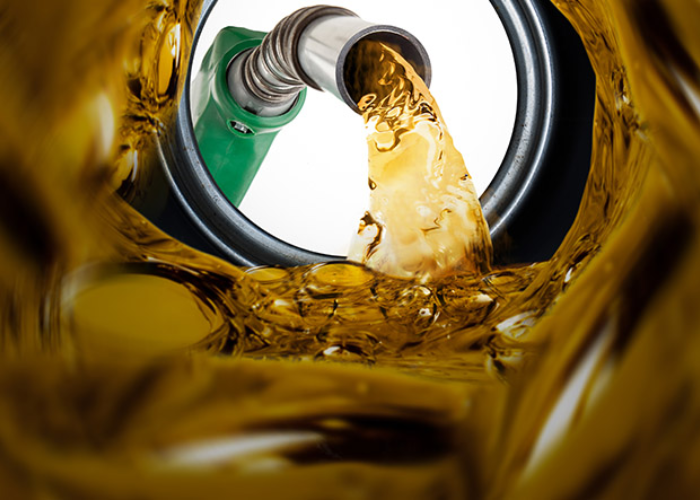
Microbiological contamination of fuels is a significant problem in storage, transportation, and distribution systems for diesel and blends containing biodiesel. The simultaneous presence of water, fuel, oxygen, nutrients, and metal surfaces can promote the growth of bacteria, fungi, and yeasts at the fuel/water interface. Microbial growth can result in the formation of biomass, organic acids, polymers, and other metabolites capable of causing filter clogging, sludge formation, microbiologically influenced corrosion (MIC), changes in fuel quality, and problems in the fuel supply and injection systems.
In this context, biocides are used both preventively to reduce the risk of microbial colonization—and in shock treatments designed to control existing contamination. However, there is no single, universally superior biocide. The choice must take into account the chemical class, concentration of the active ingredient, solubility, distribution between the oil and water phases, thermal and chemical stability, compatibility with the fuel and system materials, and the objective of the treatment. Among the chemical classes described in the technical and scientific literature, isotiazolinones, oxazolidines, and certain organoboron compounds stand out.
Isothiazolinones: CMIT/MIT
Isothiazolinones constitute one of the classic classes of industrial preservatives and biocides. Among the best-known compounds are 5- chloro-2-methyl-4-isothiazolin-3-one (CMIT), and 2-methyl-4-isothiazolin-3-one (MIT). These compounds exhibit high antimicrobial activity and can act against different groups of microorganisms, including bacteria and fungi.
In formulations intended for fuels, the composition of the commercial product is particularly important. The active ingredient must be formulated in a carrier capable of ensuring adequate distribution within the system, especially given the presence of a fuel phase and, often, an aqueous phase.
Mechanism of Action
Isothiazolinones exhibit antimicrobial activity associated with their reaction with essential cellular components of microorganisms, interfering with metabolic processes and leading to the loss of cellular viability. An important characteristic of this class is its potential for rapid biocidal action, a feature that is particularly useful for shock treatments.
Advantages
- broad-spectrum antimicrobial activity;
- high activity at low concentrations of the active ingredient;
- relatively rapid action;
- long history of use as a preservative and industrial biocide;
- availability of formulated systems for different applications.
Limitations
The stability of the active ingredient must be evaluated under actual storage conditions. Temperature, fuel composition, the presence of water, the pH of the aqueous phase, and storage time can all influence performance.
Furthermore, one should not assume that a concentration determined for one commercial formulation can be directly transferred to anoth r formulation containing the same chemical class. The concentration of the active ingredient and the vehicle used are determining factors.
Oxazolidines and morpholine derivatives
Another class of interest consists of oxazolidines, including compounds such as 3,3′-methylenebis(5-methyloxazolidine)—MBO. These compounds are used in certain biocide formulations intended for microbiological control in fuels and other industrial systems. Oxazolidines exhibit different chemical behavior than isothiazolinones and can provide a combination of antimicrobial activity, stability, and distribution characteristics within the system.
Mechanism and Characteristics
Certain oxazolidines exhibit behavior associated with the controlled release of antimicrobial species, depending on the chemical conditions of the system. This characteristic may be particularly useful in systems where the goal is not only immediate action but also prolonged protection against microbial growth. Some formulations are also commercially available with properties that protect the system against corrosion.
Advantages
- activity against different groups of microorganisms;
- potential for prolonged action;
- good compatibility with diesel and blends containing biodiesel;
- adequate stability under certain storage conditions;
- potential for use in conjunction with corrosion control strategies.
Limitations
Efficiency depends heavily on the formulation and characteristics of the fuel. The use of excessive concentrations does not necessarily result in greater efficiency. The treatment should be determined experimentally, taking into account the active ingredient actually present in the commercial product.
Organoborates and Dioxaborinanes
Organoboron compounds, including certain structures classified as dioxaborinanes, represent another approach used in the microbiological control of fuels. One of the interesting aspects of this chemistry is the combination of stability in the fuel and partition behavior in the presence of water. The distribution of the biocide between the oil and water phases is particularly important because most of the microbiological activity occurs in the region associated with the presence of water and at the water/fuel interface.
Characteristics
Organoborate-based formulations are described in the industrial literature as highly stable products suitable for applications in which the fuel remains in storage for extended periods. Some commercial formulations in this class are traditionally used in fuels intended for industrial, marine, and aviation applications.
Advantages
- high chemical stability in certain formulations;
- good persistence;
- low sensitivity to small pH variations;
- suitability for use in fuels stored for extended periods;
- favorable characteristics for systems subject to the presence of moisture.
Limitations
The rate of microbial population elimination may not necessarily be equivalent to that observed for all isotiazolinone-based systems. Therefore, comparisons between classes should consider not only initial mortality but also persistence, distribution across phases, biomass control, and stability during storage.
Comparison of the Main Classes
| Chemical class | Main characteristic | Application of greatest interest | Key Consideration |
| Isothiazolinones (CMIT/MIT) | High antimicrobial activity and rapid action | Preventive and shock treatments | Stability and compatibility must be evaluated |
| Oxazolidines (e.g., MBO) | Antimicrobial activity and potential for prolonged protection | Diesel and blends with biodiesel | Dosage depends on the concentration of the active ingredient and the formulation |
| Organoborates/dioxaborinanes | High stability and persistence | Fuels stored for extended periods | Fuels stored for extended periods |
Dosage: Why is ppm of the product not equal to ppm of the active ingredient?
One of the most important considerations in the development and control of a fuel biocide is to distinguish between ppm of the commercial product and ppm of the active ingredient. For example, a commercial product containing 1.5% active ingredient cannot be directly compared, in terms of product ppm, with another product containing 50% of the same active ingredient. The relationship can be expressed simply as:
Active ingredient concentration (ppm) = product concentration (ppm) × mass fraction of active ingredient
Thus, a technical recommendation must always specify:
- concentration of the active ingredient;
- concentration of the commercial product;
- product density;
- volume of treated fuel;
- purpose of the treatment;
- initial microbiological concentration;
- characteristics of the diesel or biodiesel.
For this reason, dosage values found in commercial literature should not be treated as a “one-size-fits-all” dose.
Preventive Treatment
Preventive treatment aims to reduce the likelihood of a microbial population establishing itself and growing. It is especially important in:
- storage tanks;
- fuels stored for long periods;
- systems with a history of contamination;
- environments prone to condensation;
- fuels containing biodiesel, which may be more susceptible to the presence of water and microbial growth.
The concentration must be determined based on the biocide specification and the effective concentration of the active ingredient.
Shock treatment
Shock treatment is used when there is already evidence of microbiological contamination. In such cases, simply adding the biocide may not be sufficient. The accumulated biomass, free water, and deposits present in the tank must be taken into account. A technically sound decontamination program typically involves:
draining the water → applying the biocide → circulation/homogenization → contact time → removal of biomass → filtration → microbiological monitoring.
The Importance of Water Removal
Water is one of the main factors associated with microbial growth in fuels. The presence of free water provides a medium in which microorganisms can grow, while the water/fuel interface provides simultaneous access to nutrients and hydrocarbons.
Therefore, before performing a shock treatment, it is recommended to assess and, when applicable, drain the free water accumulated at the bottom of the tank. Simply applying a large amount of biocide to a system containing a large volume of contaminated water may result in low operational efficiency and increase product consumption.
Filtration after treatment
An often-overlooked aspect is that the elimination of microorganisms does not necessarily mean the immediate elimination of physical contamination. After treatment, dead cells, cell fragments, detached biofilm, and other materials may remain in the fuel. Consequently, a shock treatment may be followed by:
- a temporary increase in filter loading;
- deposit formation;
- biofilm detachment;
- the need to clean the tank;
- the need to replace or maintain filter elements.
Therefore, after a shock treatment, it is recommended to establish a monitoring and filtration plan, rather than considering the treatment complete immediately after applying the biocide.
An important note regarding “manufacturer approval”
It is common to encounter marketing claims that a particular biocide is “approved by automakers.” This claim should be viewed with caution. Approval can mean different things:
- formal approval by an automaker;
- compliance with a technical specification;
- approval for a specific engine;
- approval for a specific fuel;
- approval for a specific application;
- a recommendation from the additive manufacturer;
- or simply historical use by certain users.
Therefore, for a technical specification or product development, the recommendation is to request the official approval document or specification from the engine manufacturer, clearly identifying:
product + active ingredient + concentration + fuel + application + manufacturer + specification number/revision.
Which chemical class is best?
The answer depends on the objective. If the primary requirement is rapid antimicrobial action, isothiazolinones are a class of great interest. If the goal is a solution with good activity combined with persistence and stability, oxazolidines may be an interesting alternative.
When the priority is long-term stability and persistence in the fuel, organoborates deserve special attention. Thus, a rational selection can be represented as follows:
RAPID ACTION → ISOTHIAZOLINONES
PROLONGED ACTION / PRESERVATION → OXAZOLIDINES
STABILITY / PERSISTENCE → ORGANOBORATES
However, this classification is a simplification. Actual performance depends on the commercial formulation, active ingredient concentration, fuel type, biodiesel content, presence of water, temperature, storage time, and microbial population.
Conclusion
Microbiological control of diesel and biodiesel should be treated as a chemical engineering and quality control issue, rather than simply as a matter of selecting a biocide product. Isothiazolinones, oxazolidines, and organoborates represent different chemical strategies, each offering specific advantages. The most technically appropriate choice must simultaneously consider:
biocidal activity + stability + phase distribution + fuel compatibility + material compatibility + active ingredient concentration + storage conditions + microbiological profile.
Furthermore, the effectiveness of the treatment depends heavily on the control of free water and accumulated biomass. An efficient program must therefore combine drainage, proper application of the biocide, circulation/homogenization, filtration, and microbiological monitoring. To develop a commercial formulation, the next step should be to conduct comparative laboratory tests between active ingredients, determining the minimum effective concentration, rate of action, thermal stability, oil/water partition, compatibility with diesel and biodiesel, and effect on system materials. In this way, the selection is no longer based solely on commercial information but is instead grounded in analytical performance and experimental evidence.