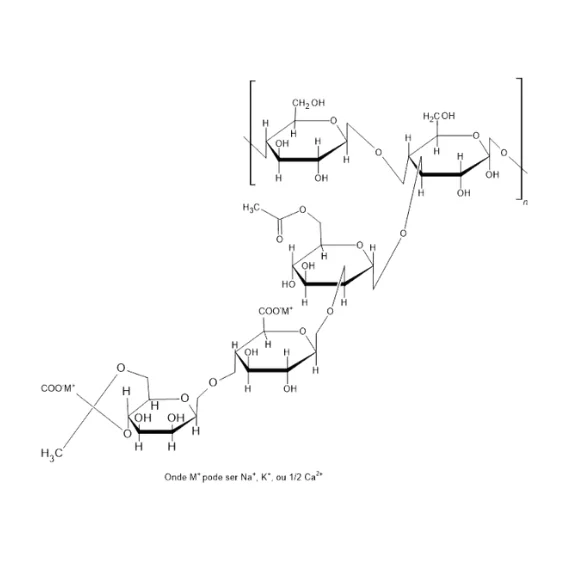
Xanthan gum is a high-molecular-weight polysaccharide produced by the fermentation of Xanthomonas campestris. It is a hydrocolloid that appears as a fine, white-to-yellowish powder with a characteristic odor. Xanthan gum is used in the food industry to improve appearance and texture, modify viscosity, and prolong the flavor, color, and odor characteristics of food. It can be used as an emulsifier, thickener, and stabilizer in candies, chocolates, ice cream, bread, pasta, beverages, cheeses, meat products, preserves, milk, soups, broths, and sauces, among others, and as a foaming agent in beverages. In the cosmetics industry, xanthan gum can be used as a binding agent, viscosity regulator, emulsion stabilizer, gelling agent, skin conditioner, and surfactant. Xanthan gum contributes to the formulation of emulsions by keeping oil and water particles dispersed and reducing their surface tension; it also prevents the ingredients in cosmetic formulations from separating or dispersing. When xanthan gum comes into contact with water, it forms a gel that can be used in creams and lotions, increasing their viscosity and improving their texture. Xanthan gum can also be used in the production of paper, inks, coatings, textiles, and adhesives as a thickener and binding agent, as well as for rheological control in water-based systems. (CAS: 111-38-662)