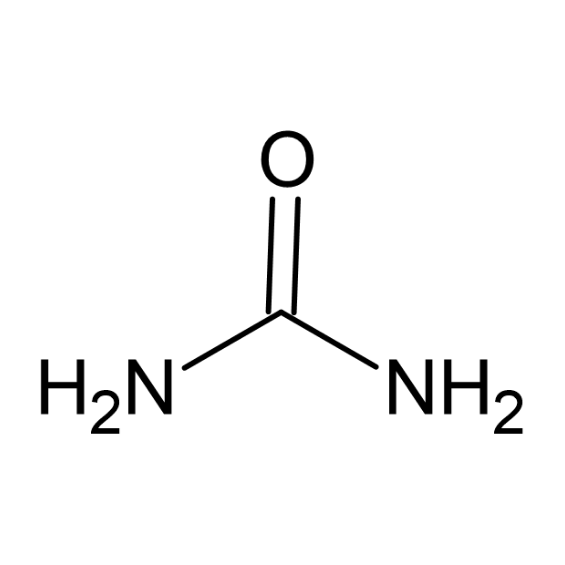
Technical-grade urea is a diamide of carbonic acid obtained through the reaction between carbon dioxide and ammonia. It appears as an odorless solid at room temperature in the form of white granules. It is a highly hygroscopic product, soluble in water, alcohol, and benzene, and practically insoluble in ether and chloroform.
Technical-grade urea can be used in the production of plastics and coatings, especially urea-formaldehyde resins. It can also be used as a surface sizing additive and an internal sizing agent in the production of paper and cardboard intended to come into contact with water-in-oil emulsions and with fats and oils that have low moisture content.
Technical-grade urea is widely used in agriculture as a fertilizer due to its high nitrogen content, approximately 46%, and in the production of pesticides and herbicides. In the sanitation and cleaning products industry, it can be used as a chelating agent, viscosity regulator, and for controlling the cloud point of detergents. (CAS: 57-13-6)
Technical-grade urea is a diamide of carbonic acid obtained through the reaction between carbon dioxide and ammonia. It appears as an odorless solid at room temperature in the form of white granules. It is a highly hygroscopic product that is soluble in water, alcohol, and benzene and practically insoluble in ether and chloroform.
Technical-grade urea can be used in the production of plastics and coatings, particularly urea-formaldehyde resins. It can also serve as a surface sizing additive and an internal sizing agent in the manufacture of paper and cardboard intended for contact with water-in-oil emulsions, as well as low-moisture fats and oils.
Technical-grade urea is widely used in agriculture as a fertilizer due to its high nitrogen content of approximately 46%, as well as in the production of pesticides and herbicides. In the sanitation and cleaning products industry, it can be used as a chelating agent, a viscosity regulator, and to control the cloud point of detergents. (CAS: 57-13-6)